

Our Calling
Who is God calling me to be?
At St. George’s Church of England Primary School, education is about more than knowledge. It is about becoming the person God is calling each of us to be. This guiding question runs through our curriculum, our spirituality, our worship and our daily experiences together. To help children explore this question, we break it down into three parts:
Who am I?
Every child is uniquely made and deeply valued. Identity is shaped by family, community and faith, and we honour each child’s story as part of our school family.
Who Am I called to be?
Children learn from others, grow in wisdom and character, and discover the kind of person they are becoming.
What do I want to do?
Through their knowledge, gifts and experiences, children are equipped to make a positive difference in the world.
Character through learning journeys
At St. George’s, lessons are not only about knowledge and skills. They are also about shaping the kind of person each child is becoming. We use simple prompts called Ow, Wow and Now to help children pause and reflect during their learning.
Ow
Ow moments recognise when something feels difficult or when mistakes are made. In maths, for example, a child may struggle with a problem but learn resilience and the courage to try again.
Wow
Wow moments highlight discovery and wonder. In science, this might be the excitement of seeing how plants grow, while in art it could be the joy of creating something unique. These moments nurture gratitude and awe.
Now
Now moments ask children how they will use their learning. In history, they may reflect on how to avoid repeating mistakes from the past. In PSHE, they might consider how to be a kinder friend. In geography, they may think about how to care for the world responsibly.
Over time, these reflections show children that learning is not only about knowledge but about character. Each subject becomes part of a bigger journey of asking Who am I becoming? and How can I use what I learn to make a difference?
Character Development
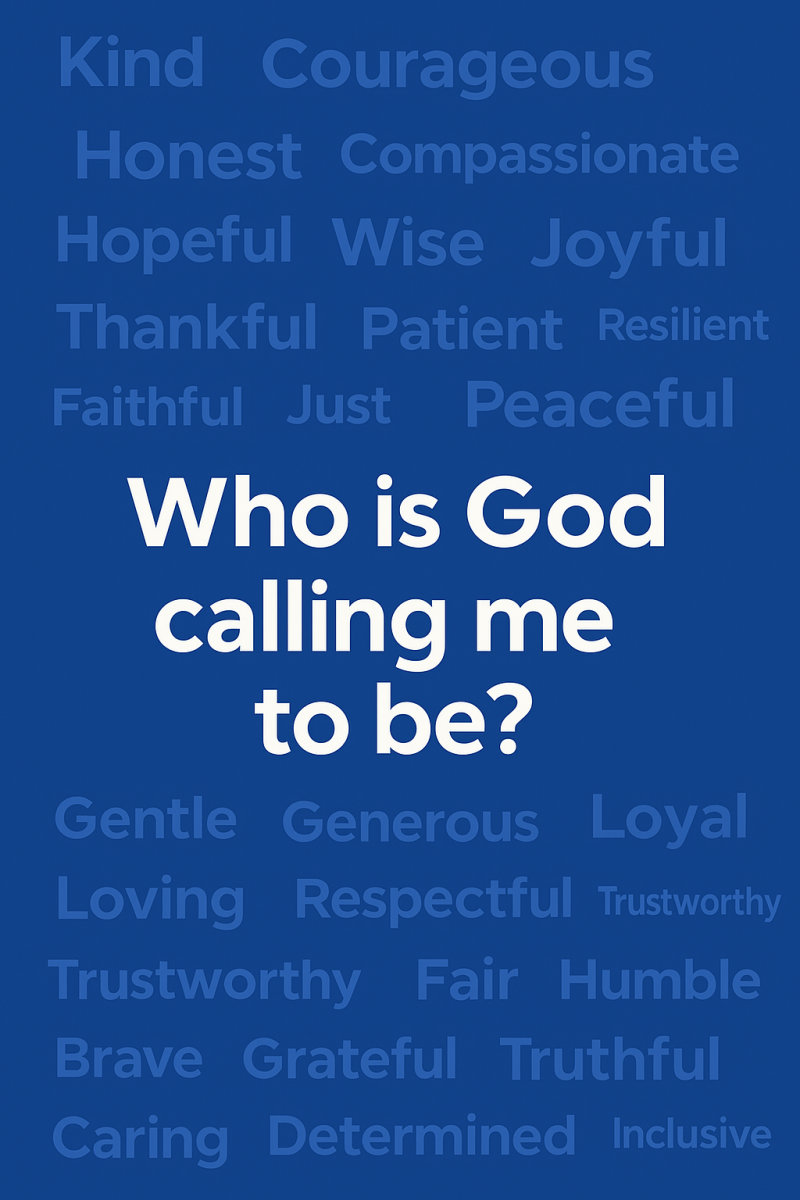
In our school character is not left to chance. It is formed through the questions we ask, the stories we share, and the ways children are invited to reflect on who they are becoming. Every lesson and every act of collective worship begins with the same guiding question: Who is God calling me to be?
These moments are not abstract. They are grounded in the realities of school life.
After hearing the story of the Good Samaritan, a child might say: ‘I need to be a friend to the person who feels left out.‘
Following a worship on forgiveness, another might reflect: ‘I am being called to let go of anger and give someone another chance.‘
A celebration of creation might inspire: ‘I want to take care of the environment, starting with picking up litter in the playground.‘
This pattern continues in the classroom. A geography lesson about rivers becomes a reflection on caring for the environment. A history lesson on injustice prompts questions about fairness today. A PSHE discussion about friendship leads to action in the playground. Each subject gives children opportunities to practise qualities such as kindness, courage, service and hope.
Through these spiritual questions, collective worship and learning are woven together. Over time, children see that education is about more than achievement. It is about forming habits of compassion, resilience, forgiveness and gratitude – the kind of character that allows them to flourish, serve others, and help build one another up.
Our saints and Houses
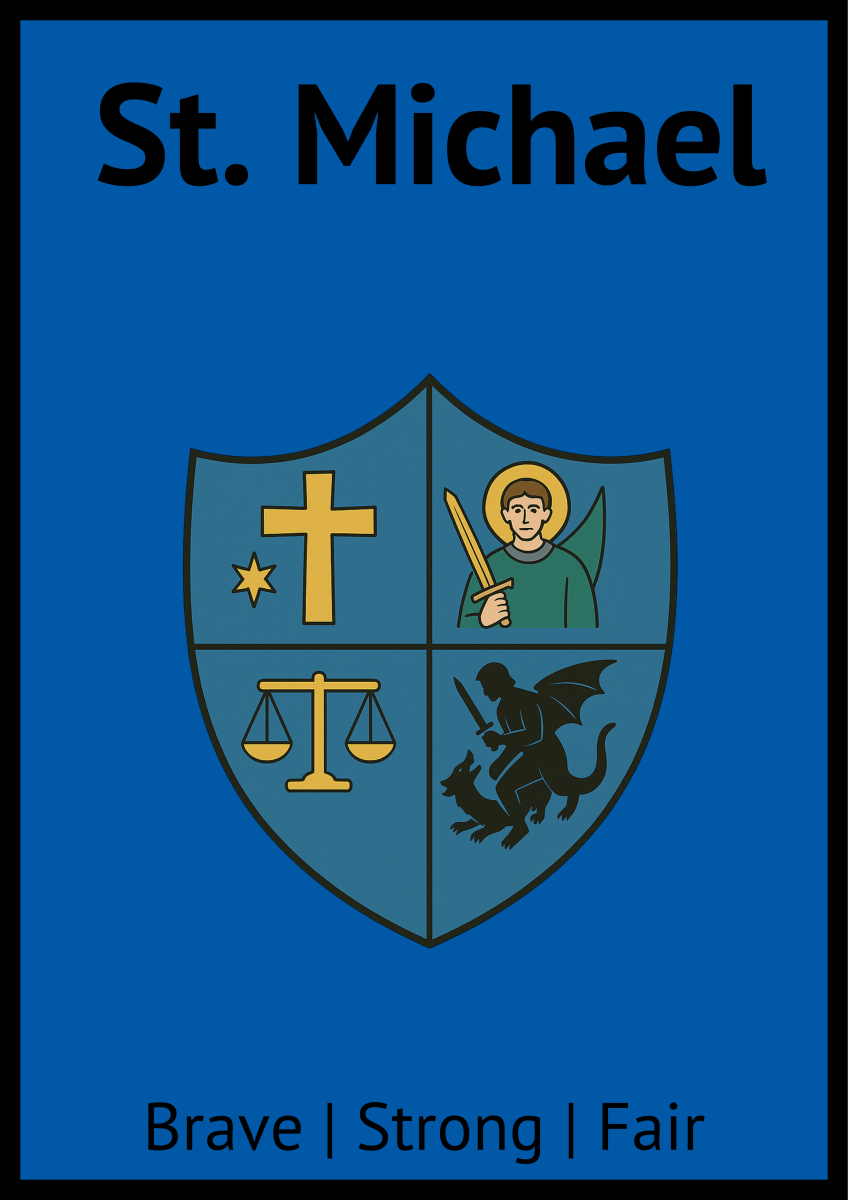
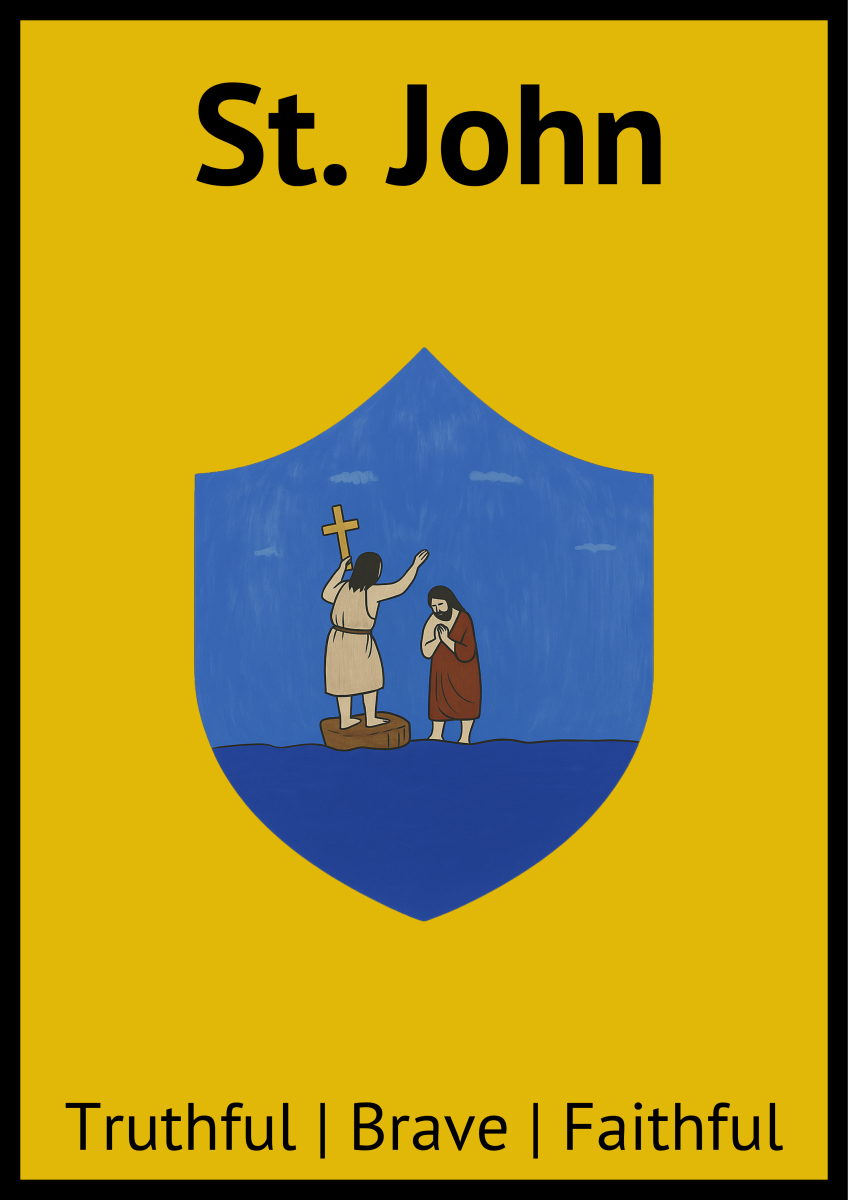
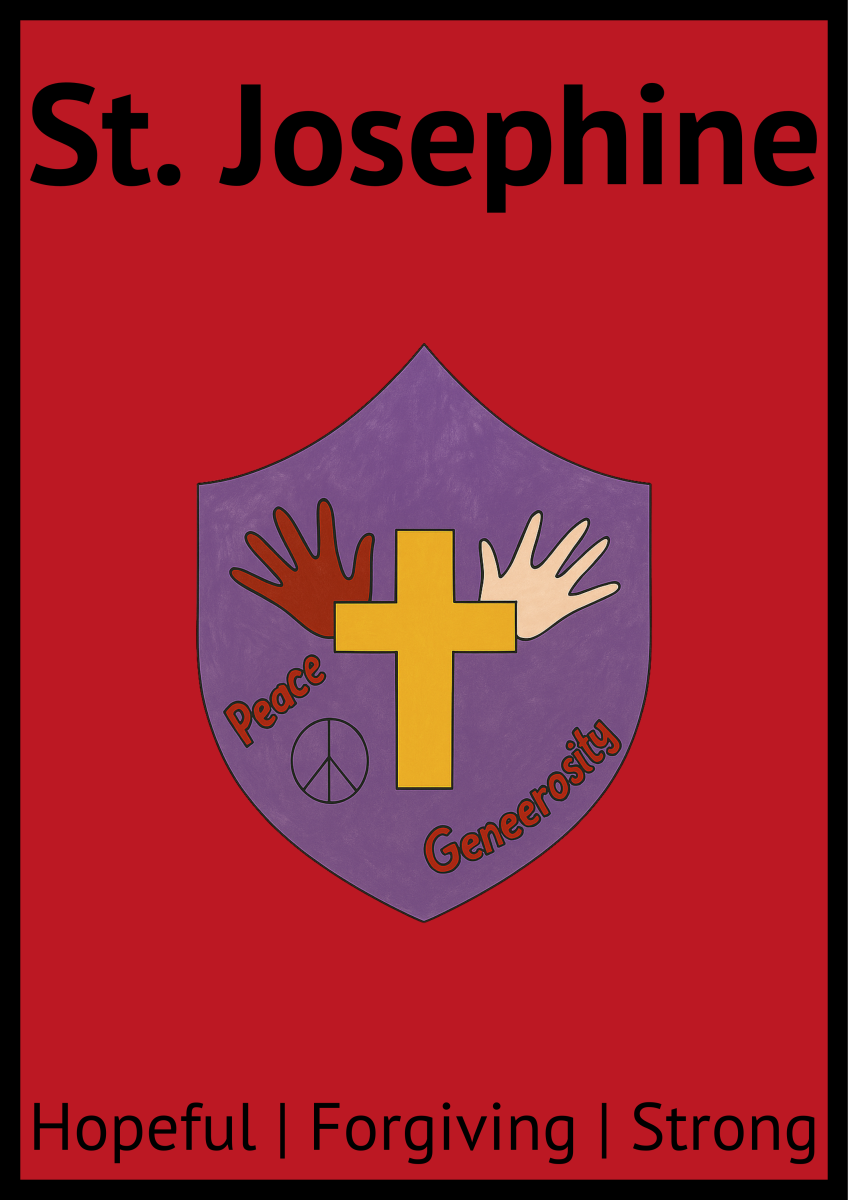
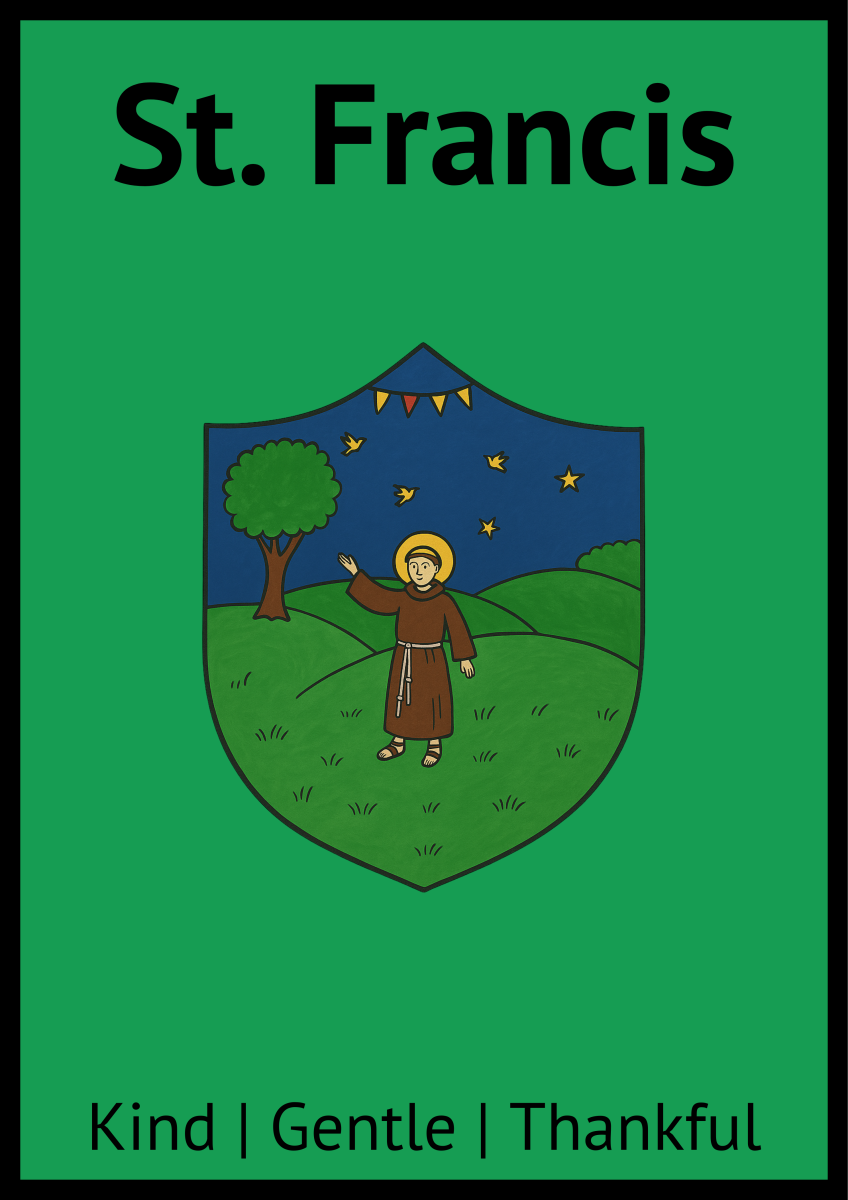
Our house system is built on the example of four saints who inspire us with their lives of faith, courage and service. Each house has three impression words which capture the qualities children are encouraged to live out each day.
St. Michael
St. Michael teaches us to be brave, strong and fair. His example reminds us to stand firm, to face challenges with courage and to treat others with justice.
St. John
St. John inspires us to be truthful, brave and faithful. He calls us to live with honesty, to show bravery in our choices and to remain faithful to what is good.
St. Josephine
St. Josephine encourages us to be hopeful, forgiving and strong. Through her life we learn that resilience and grace can transform even the most difficult situations.
St. Francis
St. Francis reminds us to be kind, gentle and thankful. His example leads us to live with compassion, to care for creation with gentleness and to practise gratitude for all we have.
Belonging to a house is more than being part of a team. It gives every child a role model to look up to and a set of qualities to practise. In this way, our saints and houses become daily guides for character development, helping each child to answer our central question: Who am I called to be?
What do I want to do?
Education opens doors to purpose and action. The question ‘What do I want to do?’ invites pupils to think about purpose and action, considering how their gifts, learning and experiences can be used to make a difference in the world.
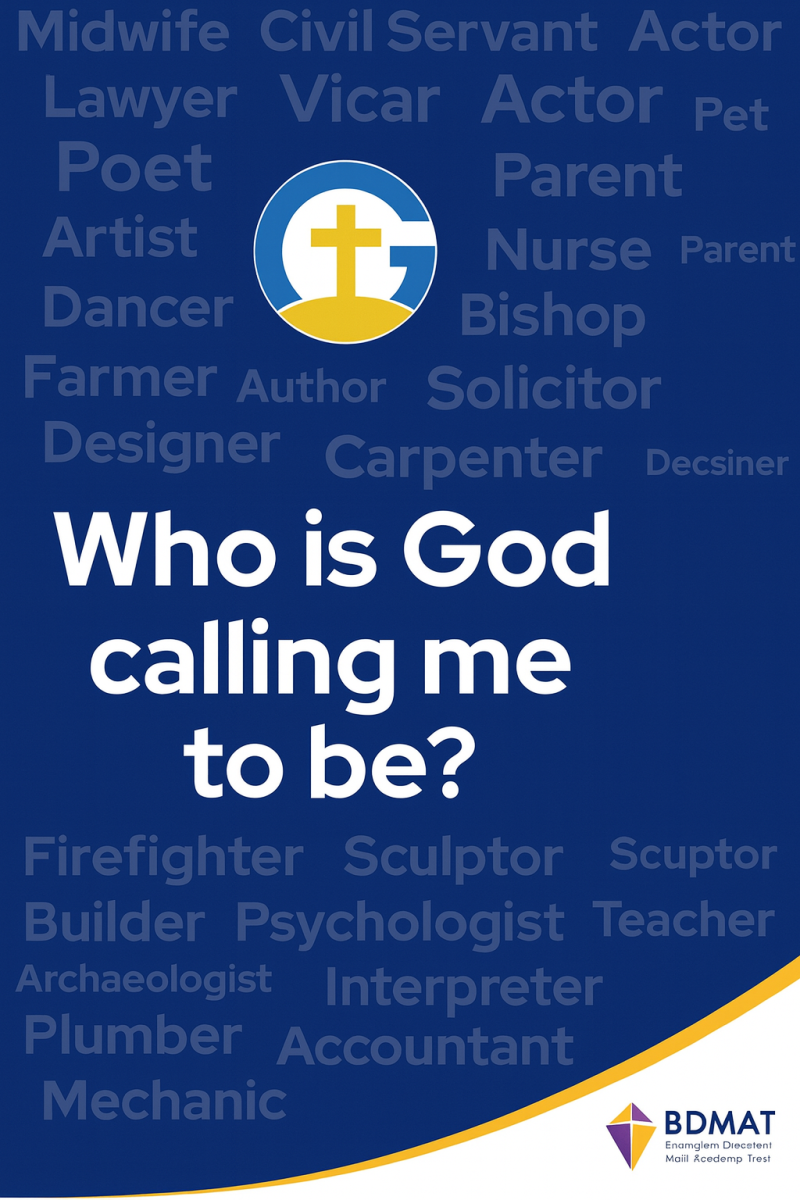
This means asking not only What job do I want in the future? but also What kind of person do I want to be as I live and work alongside others? Some children may dream of becoming doctors, teachers or engineers. Others may imagine being artists, athletes or carers. Behind each of these callings lies a deeper question: how will I use my skills to serve others and respond to the needs and injustices of the world?
Through the curriculum, children encounter stories of people who have challenged unfairness, protected the vulnerable and worked for peace. In history they learn how ordinary people stood up for justice. In geography they explore how human choices affect the planet and consider how they can live sustainably. In PSHE they reflect on their role as citizens who contribute to the common good.
By combining knowledge with action, children come to see that their learning is not an end in itself. It is preparation for a life of purpose, a life where they can be peacemakers, problem-solvers, leaders and servants of others. Asking What do I want to do? becomes a lifelong journey of using what they know and who they are to help build a fairer and more hopeful world.